
Why “Good Posture” Often Makes Back Pain at Work Worse.
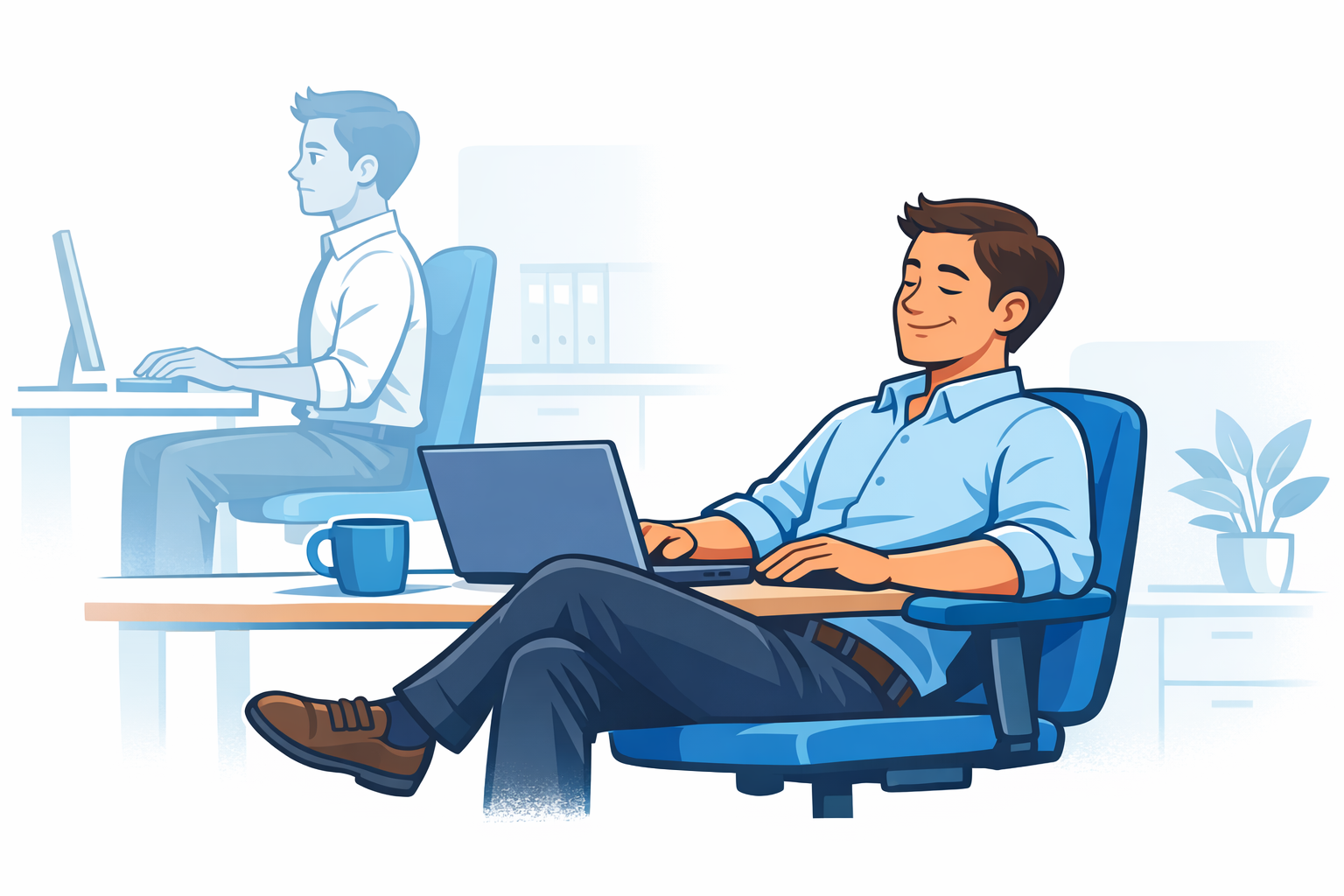
Look at most stock photos of office workers and you’ll see the same thing every time:
Bolt upright posture.
Hips and knees at perfect right angles.
Shoulders pinned back.
Head stacked neatly over the pelvis.
Now ask a more important question:
How long could a real human sit like that comfortably?
More than 30 minutes? I doubt it.
Yet this is exactly the posture many people with back pain at work are trying to hold all day — and then wondering why their pain isn’t improving.
Why “good posture” is so hard to maintain
Let’s be honest.
People who don’t suffer from back pain rarely think about their posture at all. They:
- Slouch
- Shift position
- Cross their legs
- Move without overthinking it
And most of the time, they’re absolutely fine.
Compare that to someone who does have back pain.
They’re far more likely to:
- Sit rigidly upright
- Constantly correct themselves
- Worry they’ll “damage something”
- Feel tense and uncomfortable within minutes
Ironically, the people trying hardest to sit with “perfect posture” are usually the ones already in pain.
That should tell us something.
People worry about posture because they’re in pain
Posture obsession doesn’t usually come first. Pain does.
Once pain appears, people are told (often with good intentions) that:
- Their posture is the problem
- Sitting “wrong” is damaging their spine
- They must hold themselves correctly at all times
So they try to control their body constantly.
That level of vigilance is exhausting.
And it often makes sitting feel worse, not better.
When people don’t have pain, posture is rarely something they worry about. When they do have pain, posture suddenly becomes the focus — even though it’s rarely the root cause.
A simple experiment
Try this.
Do a Google image search for “person sitting comfortably.”
Then do another search for “person sitting with good posture.”
Ask yourself honestly:
Which set of images looks more sustainable for an eight-hour workday?
Most people instinctively prefer the first group — because comfort, movement, and variation are normal human behaviours.
Trying to hold a single “correct” position for hours on end isn’t.
Why office chairs and gym balls miss the point
You might feel a bit stiff if you sit comfortably for a couple of hours without moving much. That’s normal.
But that stiffness is usually far less tiring — and far less stressful — than:
- Constantly bracing your core
- Balancing on a gym ball
- Monitoring every slouch or shift
The issue isn’t how you’re sitting.
It’s how long you’re sitting still, and how tense you are while doing it.
No posture, no chair, and no desk setup makes you immune to prolonged sitting.
What actually helps back pain at work
As an osteopath in Nottingham, I see office-related back pain daily. And in my experience, people do far better when the goal shifts from sitting correctly to sitting comfortably and moving well.
That usually means:
- Letting go of rigid posture rules
- Changing position regularly
- Feeling confident moving in and out of chairs
- Building general strength and fitness
- Reducing fear around normal spinal movement
If you move well, are reasonably fit and strong, and trust your body, you should be able to sit in a variety of positions without worrying that you’re harming yourself.
Comfortable doesn’t mean careless
This isn’t an argument for collapsing into pain-inducing positions all day.
It’s about recognising that:
- Humans aren’t designed to be still
- Discomfort doesn’t equal damage
- Movement variety matters more than posture perfection
A good aim of osteopathic treatment, in my view, is that someone can sit comfortably in an observably comfortable position — not that they’re sentenced to a lifetime of bolt-upright sitting and standing.
The bigger picture
Back pain at work is rarely caused by one “bad” posture.
It’s far more often influenced by:
- Deconditioning
- Stress
- Fear of movement
- Long periods of stillness
- Overthinking the body
When those factors improve, posture usually looks after itself.
And when people stop trying to control every movement, sitting often becomes easier — not harder.